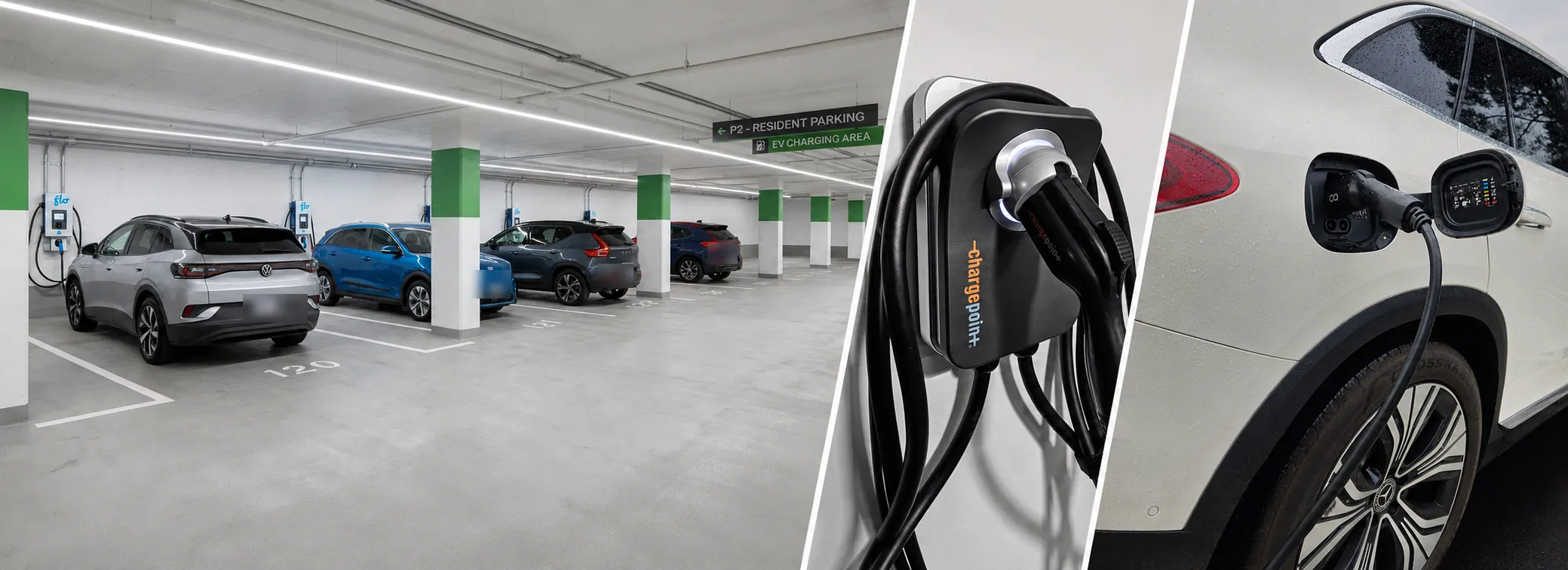
As an EV owner, you need reliable, fast charging that integrates seamlessly with your lifestyle and your home's electrical system. A dedicated Level 2 charger is the number one upgrade for new EV owners: maximum convenience, and a feature that boosts your home's resale value.
The question every homeowner asks
"Do I need to upgrade my electrical panel?"
There is a lot of technical jargon flying around home EV chargers that you honestly do not need to stress about. The call belongs to a certified electrician, who checks your home's power capacity against local building codes. If your panel has room: permit, installation, done.
And if your panel is maxed out? You have three options, and we install all three:
Most headroom
1. Full panel upgrade
Gives you plenty of room for future renovations, a heat pump, a hot tub, whatever comes next. It is the most expensive route and requires BC Hydro involvement, so it makes sense when you are planning bigger changes anyway.
Budget-friendly
2. Load sharing
Links your charger to a heavy appliance like the dryer. When the dryer runs, the charger pauses; when it stops, charging resumes. Simple, code-compliant, and a fraction of the cost of a new panel.
The smart one
3. Dynamic Load Balancing
A smart system that constantly monitors your home's total power use and automatically feeds every spare watt to your car. Nothing to think about, ever. Watch it work below.
No guesswork and no overselling: we assess your panel first, then recommend the option that fits your budget, not ours.
Homeowner questions, answered
Residential EV charging Q&A
Do I need to understand the technical details before installing a home EV charger?
No, you do not need to know the complex technical details of a home EV charger installation. FARCO Energy bridges the knowledge gap by breaking the necessary information down so it is short and easy to understand, and this page covers the essentials in plain language.
Who decides which EV charging setup is right for my home?
A licensed, experienced electrician always makes the final decision on the best EV charging setup for a home. The electrician bases that call on the home's actual electrical capacity and the requirements of the local building code, not on guesswork or sales targets.
Are all electricians up to date on the latest EV charging equipment?
Not always. EV charging equipment and technology change quickly, and it is completely normal in the electrical trade that many electricians still need to be educated on new equipment as it reaches the market. Asking an installer about load management options is a quick way to gauge how current their knowledge is.
Why choose FARCO Energy for a home EV charger installation?
FARCO Energy operates as a premium consulting and energy management firm, offering the most up-to-date charging solutions tailored specifically to homeowners. FARCO Energy is a BC Hydro Power Smart Alliance member and a ChargePoint certified installer serving the Lower Mainland.
What is the most common issue when installing a home EV charger?
The most common question and the primary technical hurdle in home EV charger installation is whether the home needs a main electrical panel upgrade. Most other steps, the permit, the mounting, the wiring, are routine once the panel question is answered.
How do I know if my home needs a panel upgrade for an EV charger?
Only a certified electrician can determine whether a home needs a panel upgrade, by assessing the home in person. The answer is 100% technical: it depends on measured capacity, not on the age of the house or the size of the car.
What does an electrician check before recommending a panel upgrade?
The electrician bases the panel-upgrade decision entirely on two things: a formal electrical load calculation for the home, and compliance with the local electrical code. If both checks pass with room to spare, no upgrade is needed.
What is the best-case result of a panel assessment?
The best-case scenario is that the home's existing electrical capacity is sufficient, meaning no main panel upgrade is needed before installing the EV charger. In that case the project moves straight to permitting and installation.
If my panel has enough capacity, what happens next?
With sufficient panel capacity confirmed, the next steps are securing the proper electrical permit and proceeding with the EV charger installation. FARCO Energy handles the permit paperwork as part of every home installation.
What does it mean when an electrician says my panel is maxed out?
A maxed-out panel means the home's current electrical panel does not have enough spare capacity to safely support a dedicated EV charger without modifications or upgrades. A maxed-out panel does not mean charging is impossible; it means one of three proven solutions is needed.
How many options do I have if my panel is maxed out?
A homeowner with a maxed-out panel has three paths to a safe EV charger installation: a full main panel upgrade, a load-sharing system (EVEMS), or a Dynamic Load Balancing system. FARCO Energy installs all three.
What is the first option for a maxed-out panel?
The first option is to accept the panel's capacity limits and proceed with a full main panel upgrade, replacing the existing panel with a larger one that has room for the charger and future loads.
What are the advantages of a main panel upgrade?
A main panel upgrade delivers three lasting benefits: a brand-new main panel, the electrical capacity to add future appliances such as heat pumps or hot tubs, and full readiness for any upcoming home renovations.
What are the disadvantages of a main panel upgrade?
A main panel upgrade is the most expensive of the three options, requires a formal service upgrade from BC Hydro, and is entirely dependent on the local grid capacity in the neighbourhood, which can add time and cost beyond the homeowner's control.
What is an EVEMS, the second option for a maxed-out panel?
An Electric Vehicle Energy Management System (EVEMS) is the second option, using load-sharing technology to add an EV charger without upgrading the panel. An EVEMS is a code-recognized solution at a fraction of the cost of a new panel.
How does load sharing work with an EV charger?
In a load-sharing setup, the EV charger shares a circuit with one high-consumption appliance in the home, such as a heat pump, range, or dryer. The household appliance always gets priority; the charger only draws power when that appliance is idle.
Does load sharing interrupt my car's charging?
Yes, briefly and automatically. When the shared appliance turns on, the EV charger temporarily stops. Immediately after the appliance is turned off, the EV charger re-establishes the load and resumes charging the car, with no action needed from the homeowner.
What is the third option to avoid a panel upgrade?
The third option is a Dynamic Load Balancing (DLB) system, the smartest of the three solutions for a maxed-out panel. The DLB animation on this page shows the system in action.
How does a Dynamic Load Balancing system work?
A Dynamic Load Balancing system constantly calculates the maximum available load from the home's main panel and dynamically delivers that available power directly to the EV charger, without ever maxing out the main panel. The car charges on every spare watt, and the home's priority loads always come first.
Can FARCO Energy install any of these three options?
Yes. FARCO Energy delivers all three solutions, panel upgrades, load-sharing EVEMS, and Dynamic Load Balancing, with the experience, knowledge, and access to the best equipment and technologies in the Canadian market, matched exactly to each homeowner's requirements and budget.
Last updated: September 2026